

Traditional Tattoo Parlors vs. Private Studios: Which Is Right for You?
Classic walk-in tattoo parlor or appointment-only private studio? How they differ on flash, walk-ins, vibe and specialties, from a traditional shop.

The front door at Electric Street Tattoo, 320 E Oakland Park Blvd
In recent years, the world of tattooing has witnessed a remarkable evolution. While traditional tattoo parlors have been the backbone of the industry for generations, trendy private studios have started to pop up everywhere, offering a fresh take on the art of ink. But what sets a traditional tattoo parlor apart from these contemporary counterparts? Let's dive into the world of ink and explore what makes a traditional tattoo parlor unique.
What makes a traditional tattoo parlor different
A Rich Heritage: Traditional tattoo parlors are steeped in history. They carry the legacy of classic American tattooing, which dates back to the early 20th century. These parlors pay homage to legendary artists like Sailor Jerry, who pioneered the iconic style.
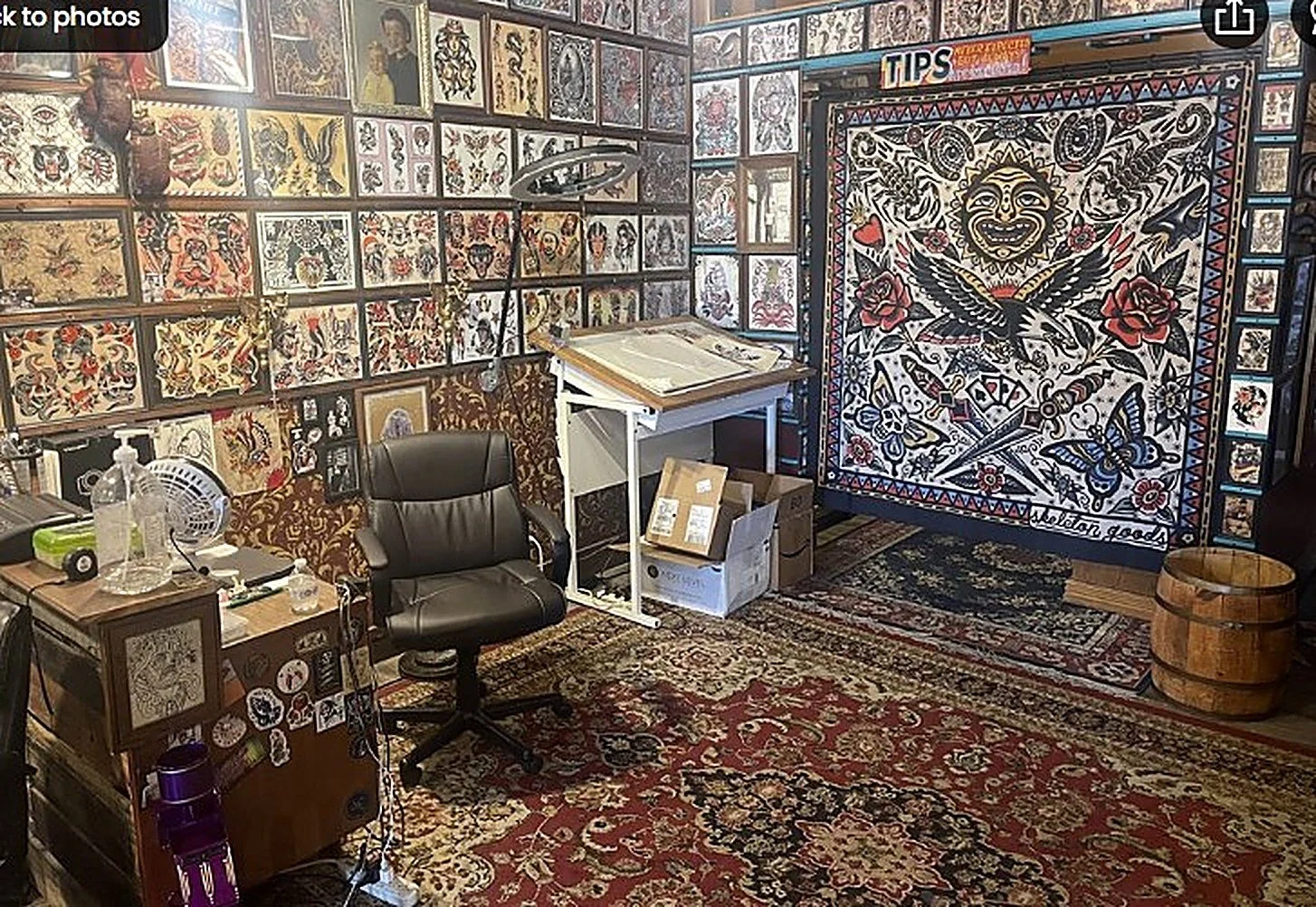
Aesthetic Nostalgia: Stepping into a traditional tattoo parlor is like stepping back in time. The décor often features vintage-inspired elements, classic flash art on the walls, and a timeless ambiance that honors the art's heritage.
Iconic Designs: Traditional tattoo parlors are known for their portfolio of iconic designs. From anchors and swallows to roses and nautical symbols, these classic images resonate with clients who appreciate the artistry of simplicity.
Bold and Time-Tested Techniques: Traditional tattoo artists are masters of bold lines and solid black outlines. Many traditional tattooers still love coil machines, though good rotary machines are used in every kind of shop today. What makes it traditional is the bold line and solid color, not the machine. These techniques ensure that your tattoo maintains its clarity and readability for years to come.
Sense of Community: Traditional tattoo parlors often foster a sense of community. Clients and artists share a passion for the history and craftsmanship of traditional tattooing. It's a place where you can connect with fellow enthusiasts.
What private studios offer
Modern Minimalism: Trendy private studios embrace modern minimalism. These spaces often have a sleek, minimalist aesthetic that appeals to clients looking for a contemporary atmosphere.
Artistic Versatility: Private studios are known for their versatility. They may offer a wide range of tattoo styles, from realism to abstract art, catering to clients seeking unique and personalized designs.
Customization: In private studios, customization is key. Artists work closely with clients to create tattoos that reflect their individuality. This level of personalization can lead to one-of-a-kind pieces of art.
Privacy and Comfort: Private studios offer a more intimate experience. Clients can enjoy privacy and one-on-one attention, which can be especially appealing for those who prefer a quieter, more relaxed setting.
How to choose
The choice between a traditional tattoo parlor and a trendy private studio ultimately comes down to personal preferences. Traditional parlors celebrate a rich heritage, iconic designs, and a sense of community, making them an ideal choice for those who appreciate classic tattooing. On the other hand, private studios offer artistic versatility, customization, and a modern aesthetic, appealing to clients seeking unique and personalized ink.
Whichever path you choose, the world of tattooing is vast and diverse, with something for everyone. Whether you're drawn to the timeless traditions of a traditional tattoo parlor or the artistic possibilities of a private studio, the ink you wear should be a reflection of your individuality and style.
What you get at a classic shop
Walk-ins and flash. Pick a design off the wall and get it today, or work out a custom idea with whoever is free.
A crew, not one artist. Several tattooers with different specialties under one roof, so you can match the artist to the tattoo.
No frills. You walk in, get tattooed and walk out with something that lasts.
Community. The buzz of machines, flash on every wall, and people swapping stories while they wait.
Private studios are usually appointment-only. They trade that energy for privacy, a quieter room, and one artist’s full attention. Both can make great tattoos, so pick the experience you want.
Visit a traditional parlor in Fort Lauderdale
Electric Street Tattoo is an artist-owned American Traditional shop at 320 E Oakland Park Blvd, serving Fort Lauderdale, Oakland Park and Broward County since 2015. Walk-ins welcome, or request a tattoo. (954) 666-1138. See how walk-ins work and meet our artists.
Tattoo apprenticeships in traditional tattoo shops: A history lesson and why they matter
Why tattoo apprenticeships matter at traditional shops: a short history, why online courses aren't the same, and how to find a real apprenticeship.

Apprenticeships have been how tattooing is passed down for generations. They are an essential part of the training process for new tattoo artists, and they play a vital role in preserving the traditions and artistry of traditional tattooing.
A brief history of tattoo apprenticeships
The history of tattoo apprenticeships can be traced back to the early days of tattooing. In traditional cultures, tattoo artists were often trained by their fathers or other family members. These apprenticeships were rigorous and demanding, and they could last for many years.
In the early 20th century, tattooing began to become more popular in the Western world. As a result, more and more people began to seek out tattoo apprenticeships. However, many of these apprenticeships were informal and unregulated. Legends like Bert Grimm learned from the tattooers before them and went on to mentor the next generation.
In the 1970s and 1980s, there was a resurgence in traditional tattooing. During this time, many traditional tattoo shops began to offer formalized apprenticeship programs. These programs were typically two to three years in length, and they covered all aspects of tattooing, from machine maintenance to design and execution.
Why are tattoo apprenticeships important?
Tattoo apprenticeships are important for a number of reasons. First, they provide new tattoo artists with the opportunity to learn from experienced professionals. Apprenticeships also help to ensure that new tattoo artists are trained in the safe and sanitary practices of tattooing.
In addition, tattoo apprenticeships play a vital role in preserving the traditions and artistry of traditional tattooing. Apprenticeships teach new tattoo artists the classic tattoo designs and techniques that have been passed down for generations.
Why learning online is not the same
While there are some online resources that can be helpful for aspiring tattoo artists, there is no substitute for a traditional tattoo apprenticeship. Online resources cannot provide the same level of hands-on training and mentorship that an apprenticeship can.
In a traditional tattoo apprenticeship, apprentices learn from experienced tattoo artists who can teach them the proper techniques for using a tattoo machine, creating designs, and working with clients. Apprentices also learn about the history and culture of tattooing, as well as the importance of safety and sanitation.
Online resources can be helpful for learning about the basics of tattooing, but they cannot replace the real-world experience of an apprenticeship. If you are serious about becoming a tattoo artist, I encourage you to seek out a traditional tattoo apprenticeship.

How to find a tattoo apprenticeship
If you are interested in finding a tattoo apprenticeship, there are a few things you can do. First, talk to your local tattoo shops and see if they have any apprenticeship openings. You can also search online for tattoo apprenticeship postings.
Once you have found a few potential apprenticeship opportunities, you should visit the tattoo shops and meet with the tattoo artists who are offering apprenticeships. This will give you a chance to learn more about the apprenticeship program and to see if it is a good fit for you.
When choosing a tattoo apprenticeship, it is important to consider the following factors:
The experience and reputation of the tattoo artist
The quality of the tattoo work that the tattoo artist produces
The length and structure of the apprenticeship program
The cost of the apprenticeship program
The bottom line
Tattoo apprenticeships are an essential part of traditional tattoo culture. They provide new tattoo artists with the opportunity to learn from experienced professionals, and they play a vital role in preserving the traditions and artistry of traditional tattooing.
If you are serious about becoming a tattoo artist, I encourage you to seek out a traditional tattoo apprenticeship. It is the best way to learn the skills and knowledge you need to become a successful tattoo artist.