

The scoop on Matching Tattoos
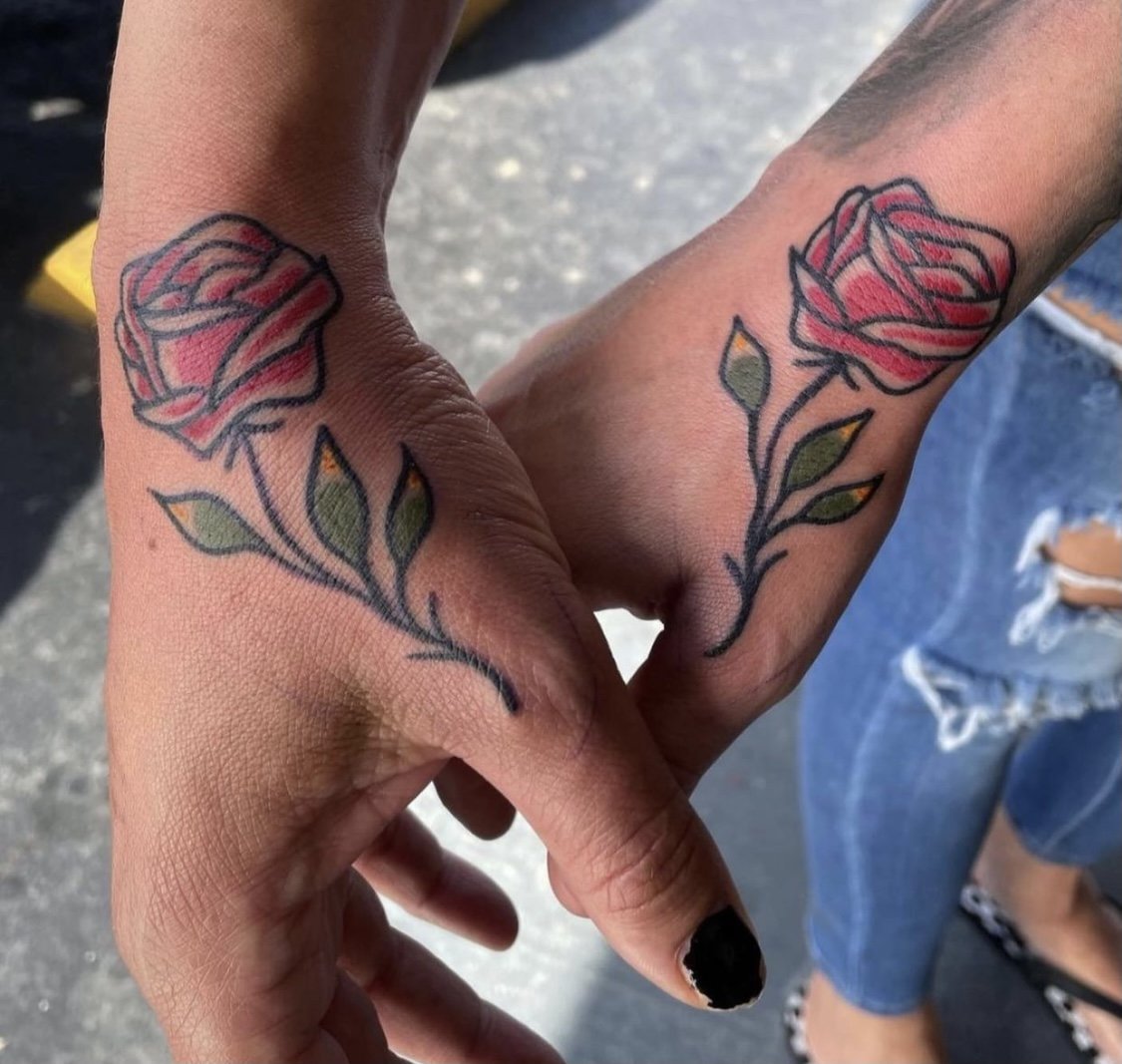
Matching Rose Tattoos
Matching tattoos have probably been around about as long as tattooing itself. I picture a small group of cavemen, or cavewomen, walking up to a tatt cave and getting matching arrows or bones or some other cave persony thing tattooed on them lol! Seriously though do any of you ever think about stuff like that?
Think about it.
‘Oh you’re going to the tattoo shop gonna get a cool tattie? Maybe I’ll come with you? Maybe I’ll get tattooed also? Hey what are you getting done maybe I’ll just get the same thing? They can be matching, it’ll be the coolest!!!’ And with that the matching tattoo was born .
Sometimes though it’s not just about having fun. Couples in relationships make up a big portion of the ‘matching tattoo’ demographic. They are a symbolic gesture. Tattoos do last a life time after all and what better step to take with the person you plan on spending the rest of your life with than to get a matching tattoo you can both share. It is a bonding experience. It is permanent, irreversible. Like we would all wish love itself to be.
Let’s look at the other side of the coin now. While tattoos are mostly permanent, love is not. Not trying to be Mr. Doom n Gloom here, just realistic. Just like the ‘name tattoo’, it’s ‘matching’ cousin is also frowned upon by many tattoo artists. There is a superstition that’s grown around it. Many tattooers refer to these kinds of ‘novelty tattoos’ more as a ‘kiss of death’ to a romantic relationship. Again, the permanence of a tattoo will almost always outlast the warm glow of a new romance. So why do people do it???
There may be more of a psychological factor than we think.
According to clinical and behavioral psychologist, Dr. Joshua Klapow he explains,”Context is everything”, “Matching tattoos and the act of getting them says as much about each individual as they do about the couple together.”
he goes on to explain,”If it’s not an impulsive decision, partners getting matching tattoos is a sign that they care deeply enough about one another to literally alter the way they look.”
Research reflects that a couple that has been together numerous years is less likely to regret getting their tattoos and possibly end up having to get them covered up.
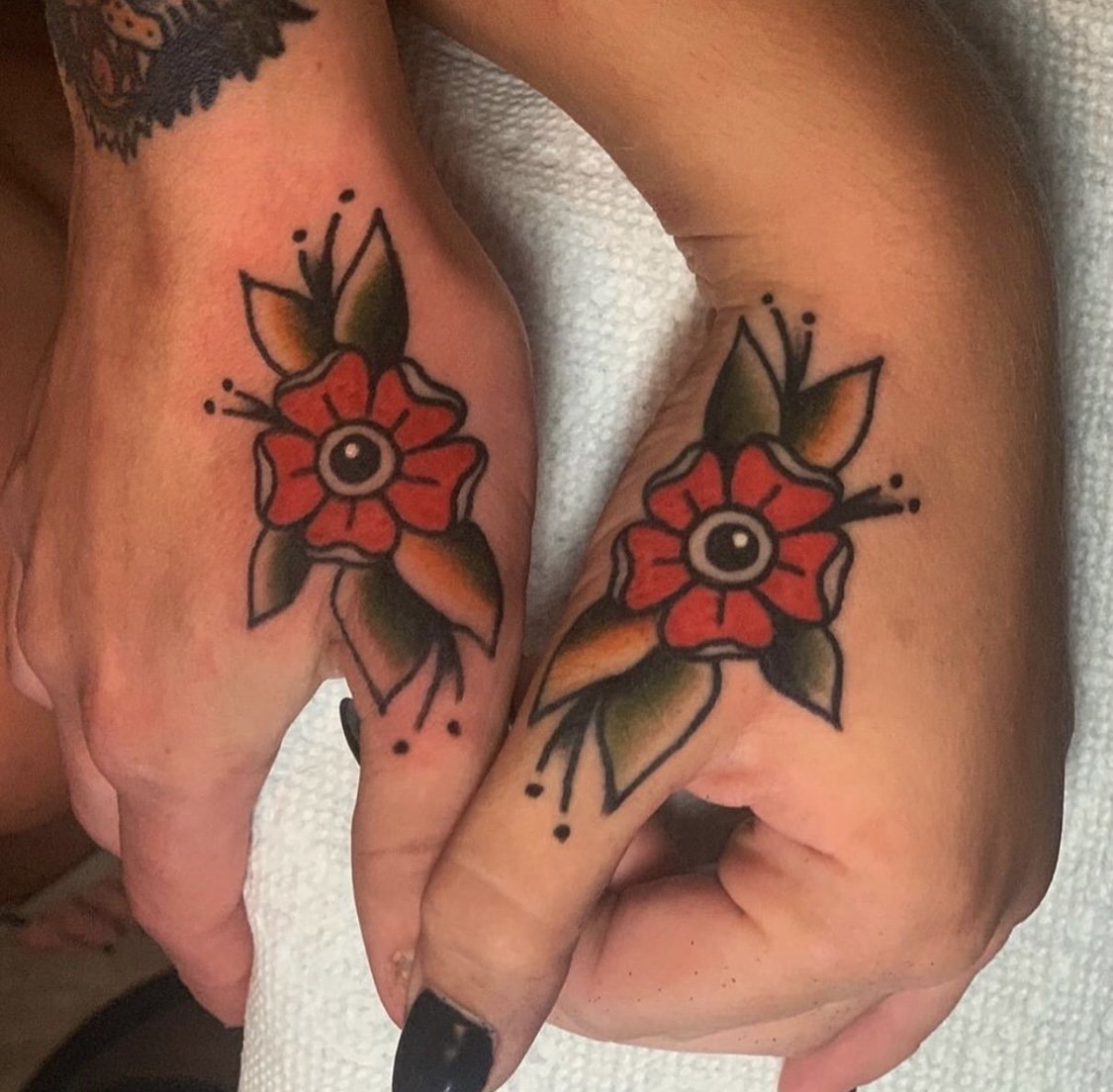
Matching Hand Tattoos
Personally, I believe there may even be an evolutionary factor that hasn’t really been addressed. Like possibly from our hunter-gatherer past? Humans hunted and gathered in groups. Is it possible that this group behavior is still tucked away somewhere deep in our “Lizard Brain”? I’m no expert but I would say most definitely yes. The evidence is all around us in the ways we behave. We pick and choose our groups, our alliances. Add to that our ritualistic nature and it’s no surprise that our culture has embraced some of these behaviors.
Am I reading to much into it? To that I would also very confidently say YES lol. Sometimes it’s ok to try and brake these things down in order to give our clients what they need from us. I know many tattoo artists that cringe when they get a group of matching tattoos. “They’re not ‘real’ tattoos”.
I’m of the opinion that not only are they real, but that they may be more ‘real’ than most other tattoos one might collect.
Getting a matching tattoo with the person you love, if both partners are into it and no one is being pressured to do so, can be a beautiful experience that can elevate your bond to a whole new level.
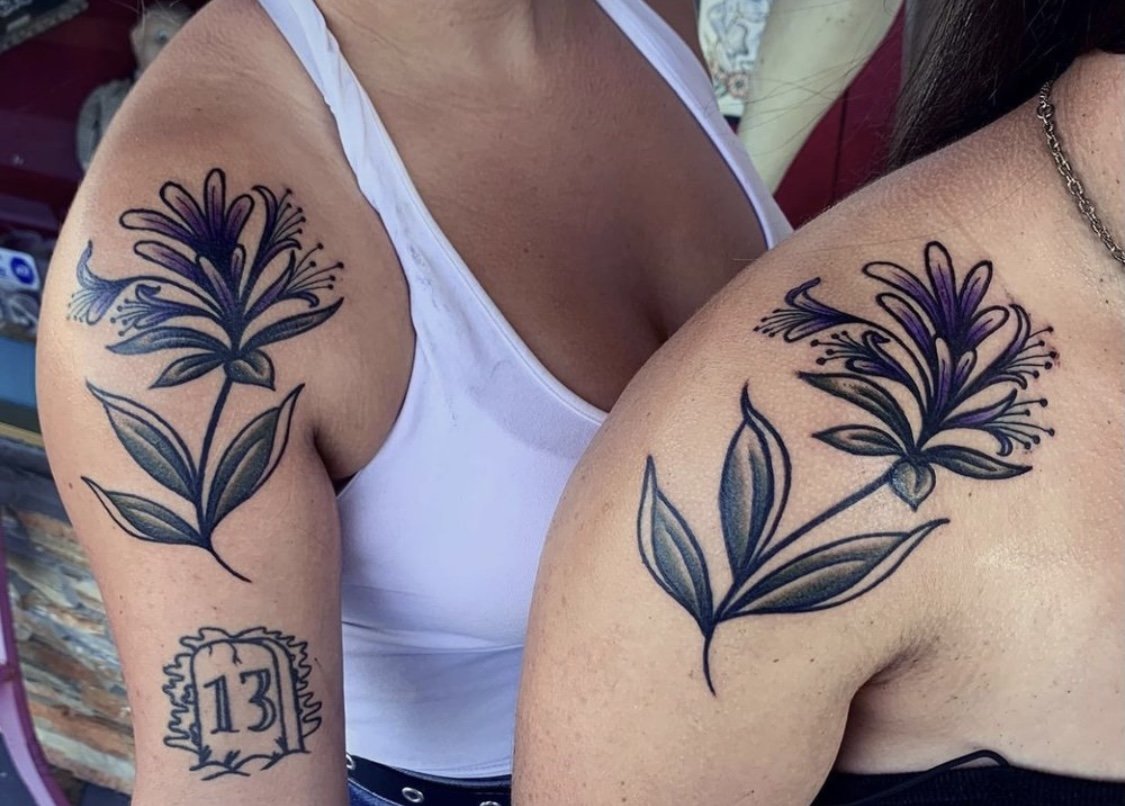
BFF Matching Tattoos

Do Tattoo Numbing Creams Really Work?
The short is: Yes, they do work. But they aren’t some magical thing that makes the tattoo experience completely painless. There are various creams, ointments, and gels all designed with the tattoo process in mind. They also vary in levels of potency although they all mostly hover round the 4-7% (lidocaine) range
All of the ingredients work to prevent inflammation, swelling, and pain during the tattooing process which sounds like a tall order but from personal experience I can honestly say I would vouch for some of these products.
I’ve always felt it very important to know what our clients go through. Have you ever seen tattoo artists with no visible tattoos anywhere in sight?
I have, do you know what that tells me? It tells me this guy, girl , person has no idea what they’re about to put me through lol
So we try these different tattoo pain numbing products on ourselves in order to pick the ones we feel are best, safest and most effective and these are the ones we use on you guys.
I might run down a short list of the ones I feel are best in a future post for what it’s worth.
For now let me just say this:
Not every tattoo requires numbing. It doesn’t make much sense to me to spend an hour numbing out skin for a small tattoo that would take ten minutes to complete. I totally understand that everyone is different and pain tolerance varies but in all my time tattooing I’ve had very few clients not able to sit through the inherent pain of a tattoo.
On the other hand, if you got it why not use it right?

Walk-ins or appointments?
Seems to me the mobile age brought with it some confusion.Smart phones and appointment booking apps certainly have made the way businesses operate more efficient, or have they?Lets dig in.
‘Does your tattoo shop do walk ins or is it by appointment only?’ This question is normally by way of a phone call. But how did they find our phone number in the first place? By looking at analytics and simply asking our clients ,some sort of search led them to our tattoo studio. Google searches in the form of , “tattoo shop near me” or word of mouth from friends who might suggest a follow to one of our social media accounts like Instagram or Facebook. Either way at this point it’s likely a ‘call now’ button or DM is sent and initial contact is made. From there the question appears yet again , ‘Do you guys accept walk in tattoos or is it by appointment only?’
What’s become obvious to me over the years as technology grows is that a ‘walk-in’ tattoo client isn’t limited to a person driving over and walking into our studio and saying hey. It’s clear that folks do a lot of their walking around digitally. Why should shopping for your next tattoo be any different?
In order to answer the question first we need to ask ourselves what a walk-in client is in the first place? Historically this would have been an individual visiting a tattoo shop without prior commitment or appointment. No monies for goods or services has been exchanged nor is there any expectation of task to be completed day of. Basically a cold call for a good and, or, service.
But wouldn’t it make sense to assume that once a phone call is made and the conversation is had that at that point a verbal contract has been made?
It would go something like this:
Me, ‘Thanks for calling Electric Street how can we help you?’
You, ‘Yes I was wondering if your shop does walk-ins or by appointment only?’
Me,’Depends on how busy we are I have an artist available right now feel free and stop by’
You,‘ Thanks! See ya soon!’
In this example I would argue that a telephone ‘walk-in’ was able to secure an appointment even though no deposit was left. In all reality yes we may be overthinking it but a worst case scenario would be the above conversation followed by the client showing up and not having a tattoo artist available right away. How would that happen? Easy, if between the time of the phone call and the clients actual arrival we were to get an influx of other actual ‘walk-ins’ tattoo clients. Since no deposit was left in order to secure the tattoo appointment we are obligated to service other clients in order of first arrival.
‘But why do I have to wait? I called a couple of hours ago and made an appointment?’
You can see how this sort of thing can get tricky.
The long and the short of it folks is that your best bet to get in and get tattooed is to make the time to show up and brake the ice. We will always do our best to accommodate 😌

Tattoo apprenticeships in traditional tattoo shops: A history lesson and why they matter

Tattoo apprenticeships have been a staple of traditional tattoo culture for centuries. They are an essential part of the training process for new tattoo artists, and they play a vital role in preserving the traditions and artistry of traditional tattooing.
A brief history of tattoo apprenticeships
The history of tattoo apprenticeships can be traced back to the early days of tattooing. In traditional cultures, tattoo artists were often trained by their fathers or other family members. These apprenticeships were rigorous and demanding, and they could last for many years.
In the early 20th century, tattooing began to become more popular in the Western world. As a result, more and more people began to seek out tattoo apprenticeships. However, many of these apprenticeships were informal and unregulated.
In the 1970s and 1980s, there was a resurgence in traditional tattooing. During this time, many traditional tattoo shops began to offer formalized apprenticeship programs. These programs were typically two to three years in length, and they covered all aspects of tattooing, from machine maintenance to design and execution.
Why are tattoo apprenticeships important?
Tattoo apprenticeships are important for a number of reasons. First, they provide new tattoo artists with the opportunity to learn from experienced professionals. Apprenticeships also help to ensure that new tattoo artists are trained in the safe and sanitary practices of tattooing.
In addition, tattoo apprenticeships play a vital role in preserving the traditions and artistry of traditional tattooing. Apprenticeships teach new tattoo artists the classic tattoo designs and techniques that have been passed down for generations.
Why learning online is not the same
While there are some online resources that can be helpful for aspiring tattoo artists, there is no substitute for a traditional tattoo apprenticeship. Online resources cannot provide the same level of hands-on training and mentorship that an apprenticeship can.
In a traditional tattoo apprenticeship, apprentices learn from experienced tattoo artists who can teach them the proper techniques for using a tattoo machine, creating designs, and working with clients. Apprentices also learn about the history and culture of tattooing, as well as the importance of safety and sanitation.
Online resources can be helpful for learning about the basics of tattooing, but they cannot replace the real-world experience of an apprenticeship. If you are serious about becoming a tattoo artist, I encourage you to seek out a traditional tattoo apprenticeship.

How to find a tattoo apprenticeship
If you are interested in finding a tattoo apprenticeship, there are a few things you can do. First, talk to your local tattoo shops and see if they have any apprenticeship openings. You can also search online for tattoo apprenticeship postings.
Once you have found a few potential apprenticeship opportunities, you should visit the tattoo shops and meet with the tattoo artists who are offering apprenticeships. This will give you a chance to learn more about the apprenticeship program and to see if it is a good fit for you.
When choosing a tattoo apprenticeship, it is important to consider the following factors:
The experience and reputation of the tattoo artist
The quality of the tattoo work that the tattoo artist produces
The length and structure of the apprenticeship program
The cost of the apprenticeship program
Conclusion
Tattoo apprenticeships are an essential part of traditional tattoo culture. They provide new tattoo artists with the opportunity to learn from experienced professionals, and they play a vital role in preserving the traditions and artistry of traditional tattooing.
If you are serious about becoming a tattoo artist, I encourage you to seek out a traditional tattoo apprenticeship. It is the best way to learn the skills and knowledge you need to become a successful tattoo artist.
#TattooApprentice #Apprenticeships #ElectricStreetTattoo
Tattoo Hygiene and Safety
Lets get right into folks
PPE (Personal Protective Equipment) is very important to the tattoo industry. I would say that hand hygiene is every bit as important as personal hygiene, more so even
Maybe your artist is the type to skip out on deodorant but how would you feel if he was to also skip out on gloves while tattooing you ??? lol Pretty gross right ? We agree !

Tattooing is not just art, It’s a responsibility
When should gloves be worn you ask ? Pretty much always ,not only during the actual tattoo process but on all occasions when the artist is handling the clients skin which include, but are not limited to the following:
While drawing on the skin
Applying the stencil
Cleaning and wrapping the finished tattoo
Some things I’ll be covering in future posts
How to work with gloves
Different types of gloves
Disposable arm sleeves
face masks
eye protection
protective aprons and footwear
Stay tuned…