

Traditional Tattoo Parlors vs. Private Studios: Which Is Right for You?
Classic walk-in tattoo parlor or appointment-only private studio? How they differ on flash, walk-ins, vibe and specialties, from a traditional shop.

The front door at Electric Street Tattoo, 320 E Oakland Park Blvd
In recent years, the world of tattooing has witnessed a remarkable evolution. While traditional tattoo parlors have been the backbone of the industry for generations, trendy private studios have started to pop up everywhere, offering a fresh take on the art of ink. But what sets a traditional tattoo parlor apart from these contemporary counterparts? Let's dive into the world of ink and explore what makes a traditional tattoo parlor unique.
What makes a traditional tattoo parlor different
A Rich Heritage: Traditional tattoo parlors are steeped in history. They carry the legacy of classic American tattooing, which dates back to the early 20th century. These parlors pay homage to legendary artists like Sailor Jerry, who pioneered the iconic style.
Aesthetic Nostalgia: Stepping into a traditional tattoo parlor is like stepping back in time. The décor often features vintage-inspired elements, classic flash art on the walls, and a timeless ambiance that honors the art's heritage.
Iconic Designs: Traditional tattoo parlors are known for their portfolio of iconic designs. From anchors and swallows to roses and nautical symbols, these classic images resonate with clients who appreciate the artistry of simplicity.
Bold and Time-Tested Techniques: Traditional tattoo artists are masters of bold lines and solid black outlines. Many traditional tattooers still love coil machines, though good rotary machines are used in every kind of shop today. What makes it traditional is the bold line and solid color, not the machine. These techniques ensure that your tattoo maintains its clarity and readability for years to come.
Sense of Community: Traditional tattoo parlors often foster a sense of community. Clients and artists share a passion for the history and craftsmanship of traditional tattooing. It's a place where you can connect with fellow enthusiasts.
What private studios offer
Modern Minimalism: Trendy private studios embrace modern minimalism. These spaces often have a sleek, minimalist aesthetic that appeals to clients looking for a contemporary atmosphere.
Artistic Versatility: Private studios are known for their versatility. They may offer a wide range of tattoo styles, from realism to abstract art, catering to clients seeking unique and personalized designs.
Customization: In private studios, customization is key. Artists work closely with clients to create tattoos that reflect their individuality. This level of personalization can lead to one-of-a-kind pieces of art.
Privacy and Comfort: Private studios offer a more intimate experience. Clients can enjoy privacy and one-on-one attention, which can be especially appealing for those who prefer a quieter, more relaxed setting.
How to choose
The choice between a traditional tattoo parlor and a trendy private studio ultimately comes down to personal preferences. Traditional parlors celebrate a rich heritage, iconic designs, and a sense of community, making them an ideal choice for those who appreciate classic tattooing. On the other hand, private studios offer artistic versatility, customization, and a modern aesthetic, appealing to clients seeking unique and personalized ink.
Whichever path you choose, the world of tattooing is vast and diverse, with something for everyone. Whether you're drawn to the timeless traditions of a traditional tattoo parlor or the artistic possibilities of a private studio, the ink you wear should be a reflection of your individuality and style.
What you get at a classic shop
Walk-ins and flash. Pick a design off the wall and get it today, or work out a custom idea with whoever is free.
A crew, not one artist. Several tattooers with different specialties under one roof, so you can match the artist to the tattoo.
No frills. You walk in, get tattooed and walk out with something that lasts.
Community. The buzz of machines, flash on every wall, and people swapping stories while they wait.
Private studios are usually appointment-only. They trade that energy for privacy, a quieter room, and one artist’s full attention. Both can make great tattoos, so pick the experience you want.
Visit a traditional parlor in Fort Lauderdale
Electric Street Tattoo is an artist-owned American Traditional shop at 320 E Oakland Park Blvd, serving Fort Lauderdale, Oakland Park and Broward County since 2015. Walk-ins welcome, or request a tattoo. (954) 666-1138. See how walk-ins work and meet our artists.

Bert Grimm: The Grandfather of Old School Tattooing
Who was Bert Grimm? The carnival tattooer from St. Louis and the Long Beach Pike who shaped American Traditional, and his famous tiger.
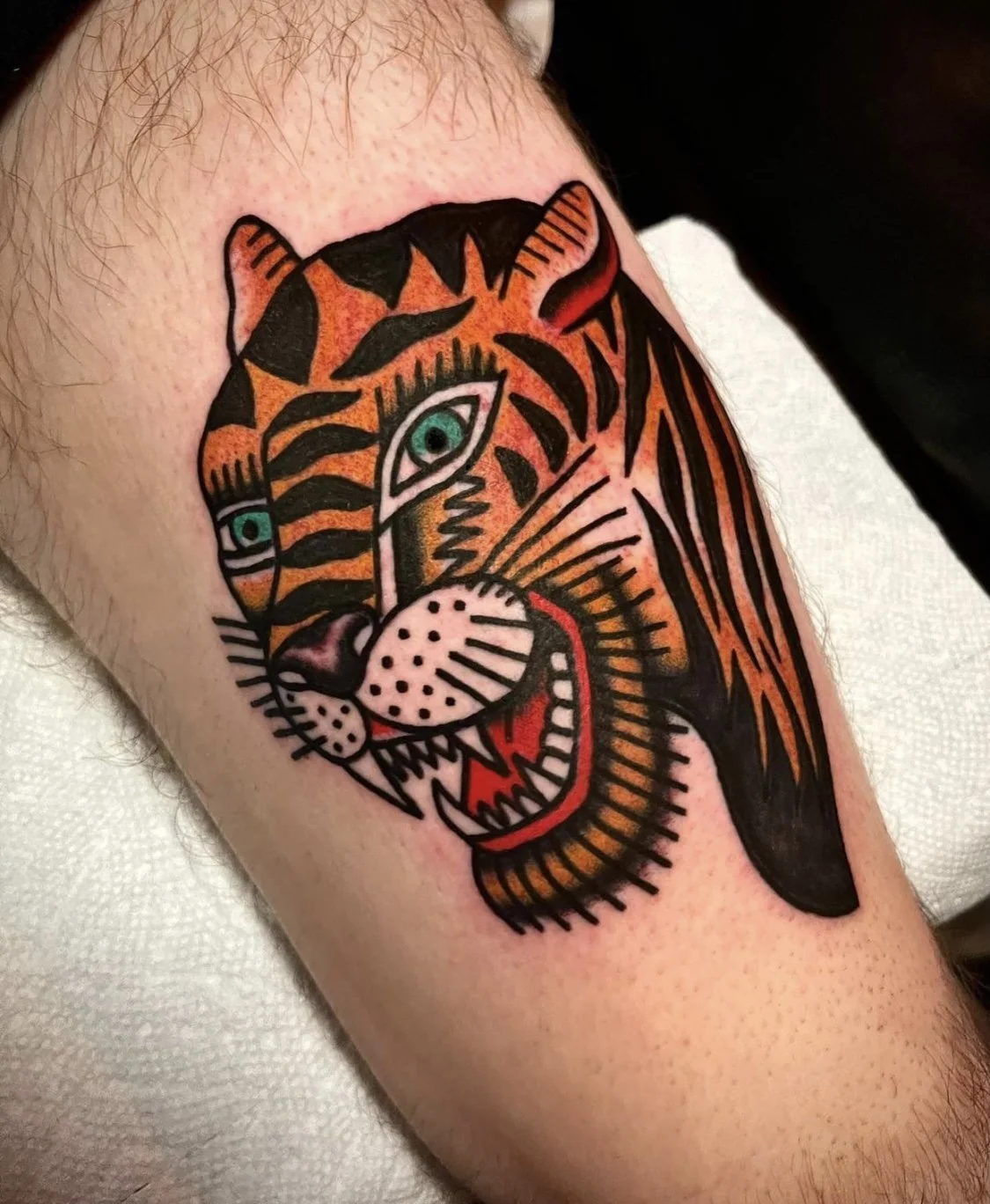
Grimm Tiger by our own Nick Lazcano
Here at Electric Street Tattoo we like to pay respect where it’s due, and it’s always an honor for us to tattoo these designs handed down by those who came before us.
Who was Bert Grimm?
Bert Grimm is one of those pioneers in the art of tattooing that we look up to.
I’m sure lots of you have heard of Sailor Jerry or Ed Hardy
An even greater portion of you can probably sound off on every ‘Inkmaster’ going all the way back to season one
And while all that is fine and great, there are sooooo many other great tattoo artists that not too many bother acknowledging
Bert Grimm is certainly one of those
From the carnival to the Pike
Like other tattooers of his time he worked as a sideshow tattoo artist traveling the carnival circuit before going on to operate several tattoo studios of his own. Bert Grimm (1900–1985) learned from Sailor George Fosdick and Sailor Charlie Barrs, then tattooed in St. Louis from 1928. In 1954 he bought the Nu-Pike shop in Long Beach, California. He mentored tattooers like Lyle Tuttle and Bob Shaw, and is often called the grandfather of old school. With his stripped down American Traditional style he tattooed the arms, chests and backs of hundreds of military men and covered the bodies of many sideshow attractions.
His contributions are great and his influence on modern day tattooing, unquestionable.
The Grimm tiger
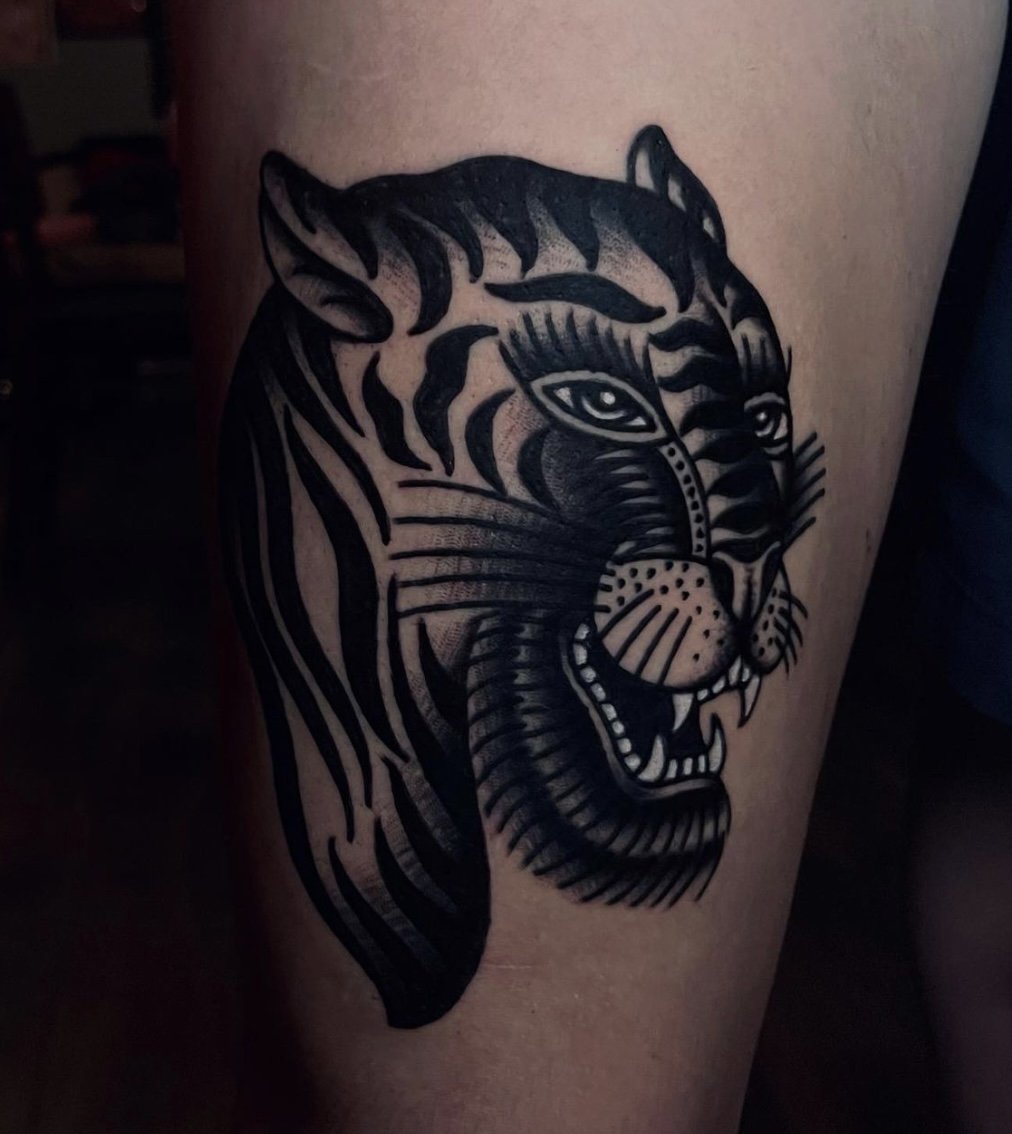
Grimm Tiger by our own Alex Joelle
Read the full history of American Traditional, or about Sailor Jerry. Want a Grimm tiger? Request a tattoo.

Classic American Eagle Tattoos
Sure I can get into all the details about why Eagle Tattoos are so cool and so much fun for us as tattoo artists, but I’m not

Screaming Chest Eagle
Instead I’m going to take this opportunity to showcase some of these beautiful freedom birds tattooed at our shop.

Dueling Eagle and Snake
Eagles are amongst the most patriotic of tattoo ideas.
They are wildly popular and symbolic in American culture.
Freedom and independence are two traits associated with the eagle.

Photorealistic Eagle screams of Americana
You’ll commonly see the eagle with flags or other nationalistic symbols or in full fledged combat with other animals. The eagle and snake duel is a popular scene in many traditional tattoo studios.

Combative Chest Eagle
Historically a masculine tattoo the eagle is now embraced as a symbol of strength and enduring character by both men and women alike.

Traditional Eagle and Banner
Certainly worthy of any tattoo collectors consideration the eagle is in the top ten most popular tattoo flash designs by traditional tattoo artists across the globe.
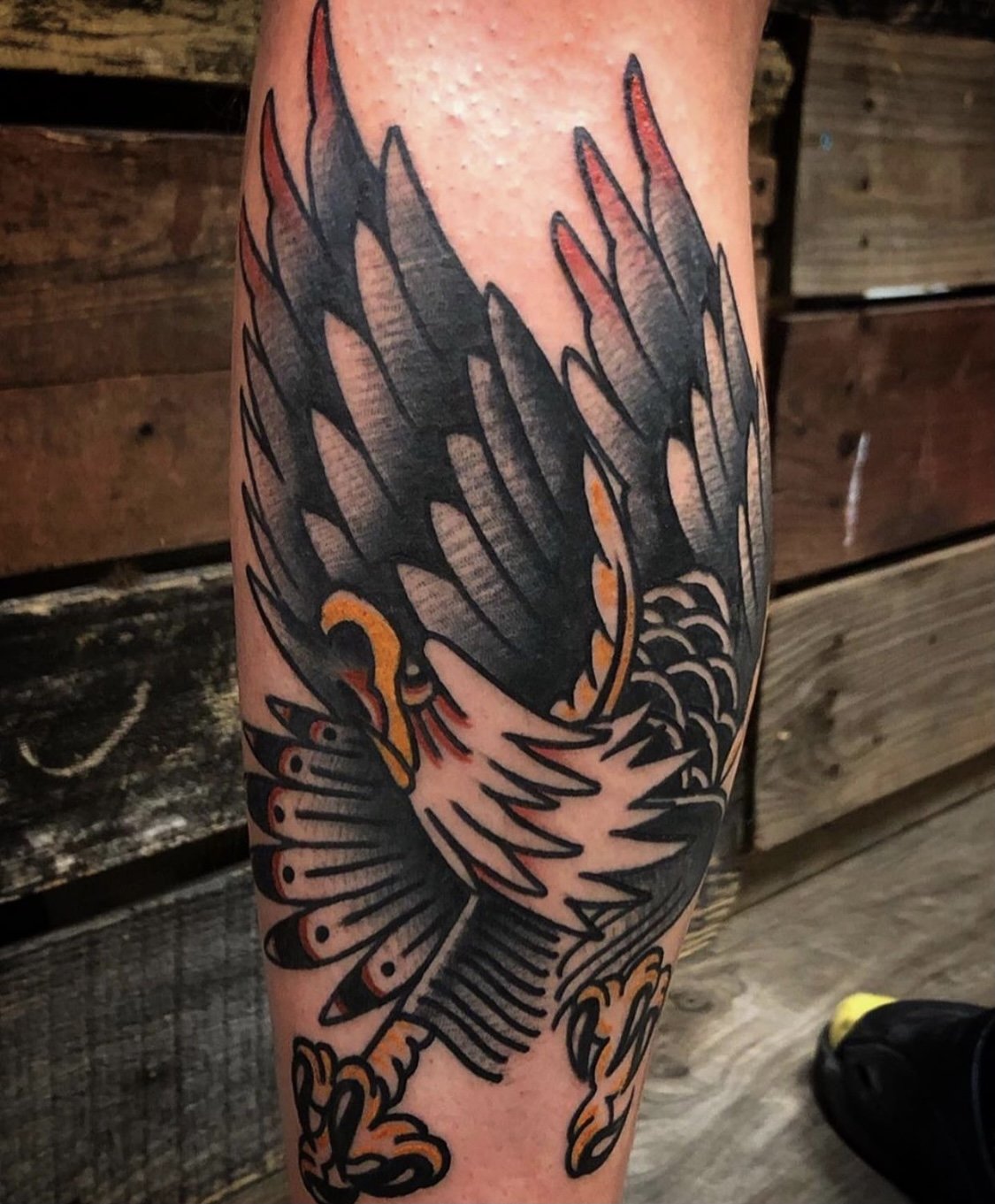
‘Whipshaded’ Eagle

Stomach Eagle

More eagles tattoos coming soon…

Tattoo Traditions
Here at Electric Street, we value and appreciate the art and history of tattooing. Tattooing has been around since as early as 3370 BC! Many different countries and cultures have used tattoos for different reasons; such as showing status, representing a tribe, honoring a lost friend or lover, or simply showing off ones freedom.
Tattooing is a tradition.

Tattooing through the 20th century gave way for evolution and growth in style, technique, and equipment. Through the 1910’s - 1930’s, tattoos were mainly found on sailors or sideshow performers at the circus as it was not something very common to see. In the 1940’s, the pioneer of traditional tattooing was on the rise. Normal Keith Collins, better known as “Sailor Jerry”, changed the basis of tattooing in America. He added color to his tattoos which made them stand out. His nautical and military themed designs were very popular amongst those in the service. Eventually, people who were just proud to be Americans were getting patriotic Jerry style tattoos. Tattoos became a symbol of strength and masculinity but was not widely accepted as it was still given a negative social stigma. Over time, tattoos became more popular and more accepted in society. Machines were build better and stronger, inks were made brighter and more diverse, and designs got more intricate. There have been many men that paved the way for modern tattooing and through them, we believe in keeping the tradition alive. We are simply standing on the shoulders of giants.

Norman “Sailor Jerry” Collins