
Stoney St. Clair: Sword Swallower, Sideshow Tattooer, Teacher of the Art
Stoney St. Clair swallowed swords in a circus sideshow, then tattooed old school from 1928 to 1980. His life, his flash, and his tattoo on Ed Hardy.
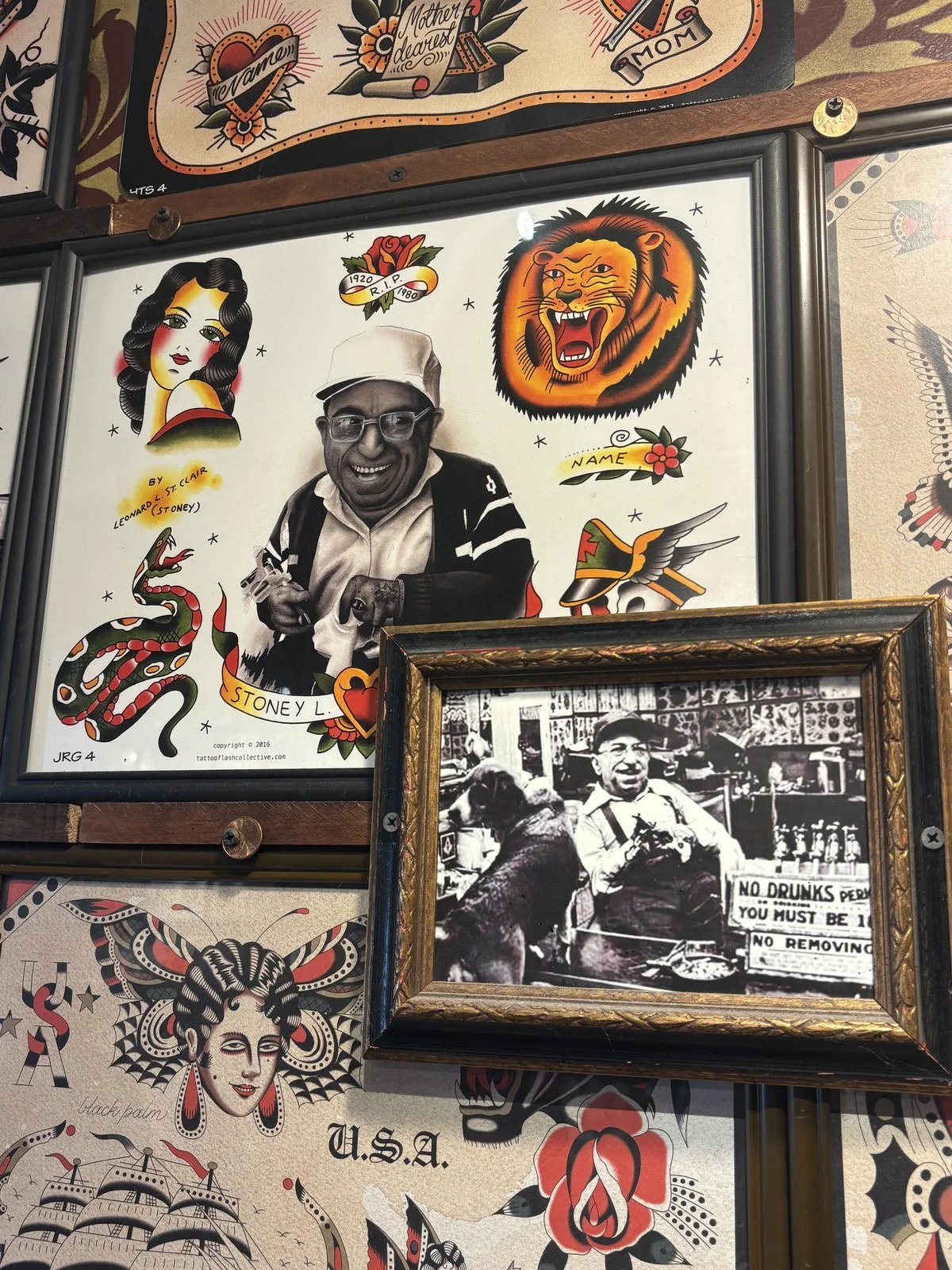
Our Stoney wall at Electric Street Tattoo: a Stoney St. Clair tribute sheet from Tattoo Flash Collective, next to a framed photo of Stoney in his shop.
Leonard "Stoney" St. Clair (1912–1980) was a circus sword swallower who became one of the great characters of American tattooing. He tattooed from a wheelchair, on the road with circuses and carnivals and later in his own shops, for more than 50 years. His Columbus, Ohio, shop called him "the Teacher of the Art."
He isn't as famous as Sailor Jerry. But if you love traditional tattooing, Stoney is worth knowing. His life is the old carnival road that our style came from.
Who was Stoney St. Clair?
Stoney was born Leonard L. St. Clair in West Virginia in 1912, in coal country. His grandfather and father worked in the mines.
At four he was struck by rheumatoid arthritis. He never walked again, and his growth was stunted. His father, who earned $2.50 a day, paid to send him to Johns Hopkins in Baltimore, where he stayed 24 months. That's where he learned to draw. He used up his stationery drawing circus wagons, one per sheet, and pasted them into a long parade.
Folklorist Alan Govenar, who knew him well, says Stoney could barely open his hands flat. He could still draw and paint, and later tattoo.
From sword swallower to tattooer
The circus was in the family. Stoney had an uncle in the business, and he wanted in.
His break came from a German sword swallower named Gretchen. She was fired from a show in Bluefield, West Virginia, about 30 miles from his home, heard his story and took him under her wing. In his telling, within three days she had a stove poker down his throat. He joined the show as a teenager, making $75 a week with three meals a day and a berth on the circus train.
Then the circus played Norfolk, Virginia. Stoney went into the shop of August "Cap" Coleman, one of the best-known tattooers of the day, and watched a man put an eagle on a sailor's back.
"I knew I could draw a better eagle than that," he said.
He borrowed a sheet of paper and drew one. Coleman asked how he'd learned. Stoney said he just picked it up. He came back every day the show was in town. On the last day, Coleman gave him two old machines and a few sheets of designs. Professor E.J. Miller, across the street, showed him how to cut a stencil with a phonograph needle and gave him black and red.
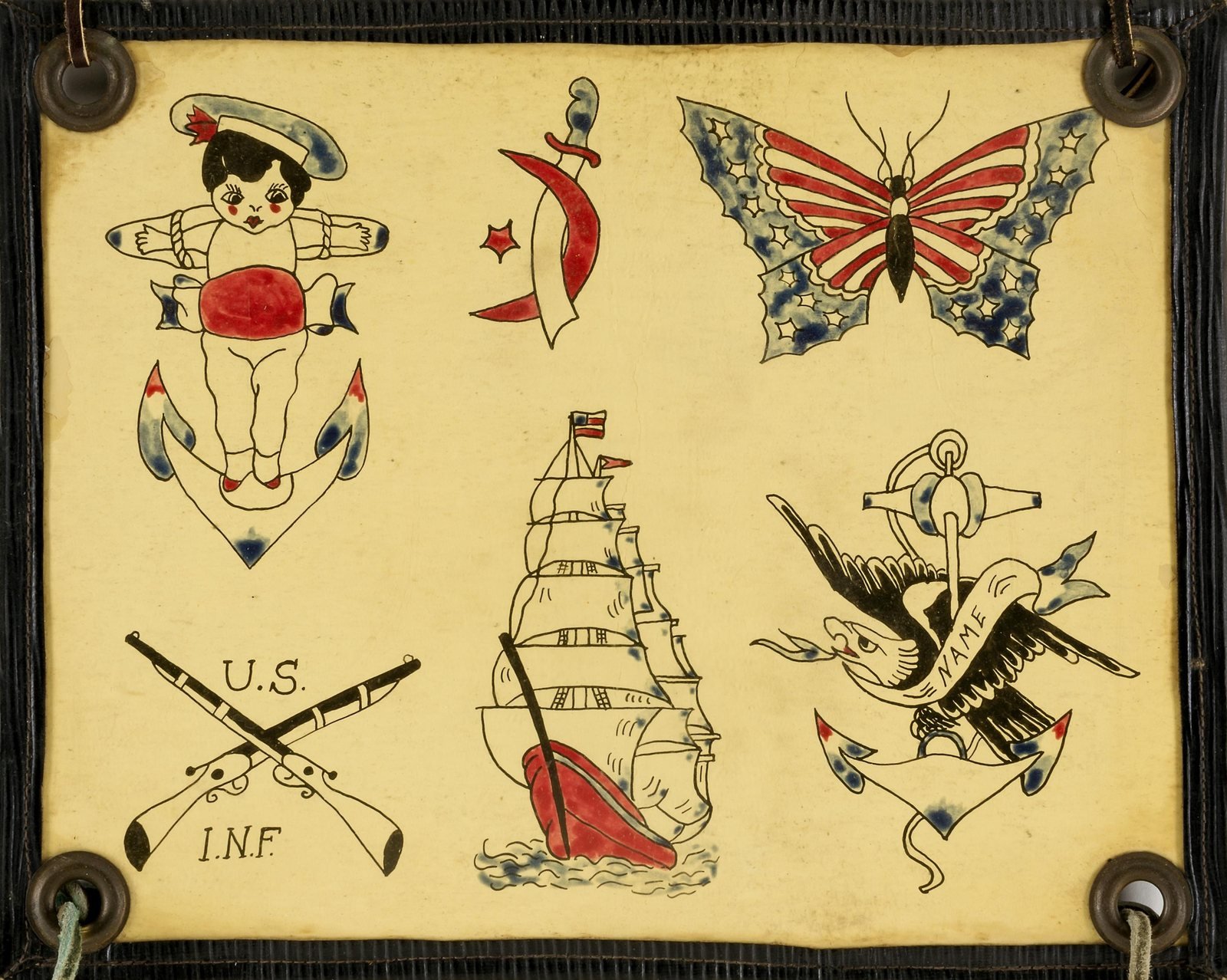
Vintage American tattoo flash from the same era, artist unknown. Not Stoney’s work. Smithsonian American Art Museum, public domain (CC0). Source: Smithsonian American Art Museum
Stoney practiced on grapefruits. Then he tattooed showmen behind the elephant barn. When the show's tattooer got into a fight with the sideshow boss and was run off, the boss put the kid on the platform: names and hearts, nothing complicated. He said he'd advertise for a new tattooer. He never did.
That was 1928. For the rest of his life, Stoney signed himself "Tattooist of the Old School since 1928."
Life on the road
For about 50 years Stoney tattooed with circuses and carnivals across the country. Between tattoos he ran snake shows. He worked them as an educational exhibit, he said: "no damn geek or wild man crap."
He crossed paths with the big names of the era. He spent two months working in Charlie Wagner's shop on the Bowery in New York to raise money to get to Florida. He carried daggers on his flash that he got from a tattooer called Sailor Catsy, who was killed by his own python at a small zoo below Tampa.
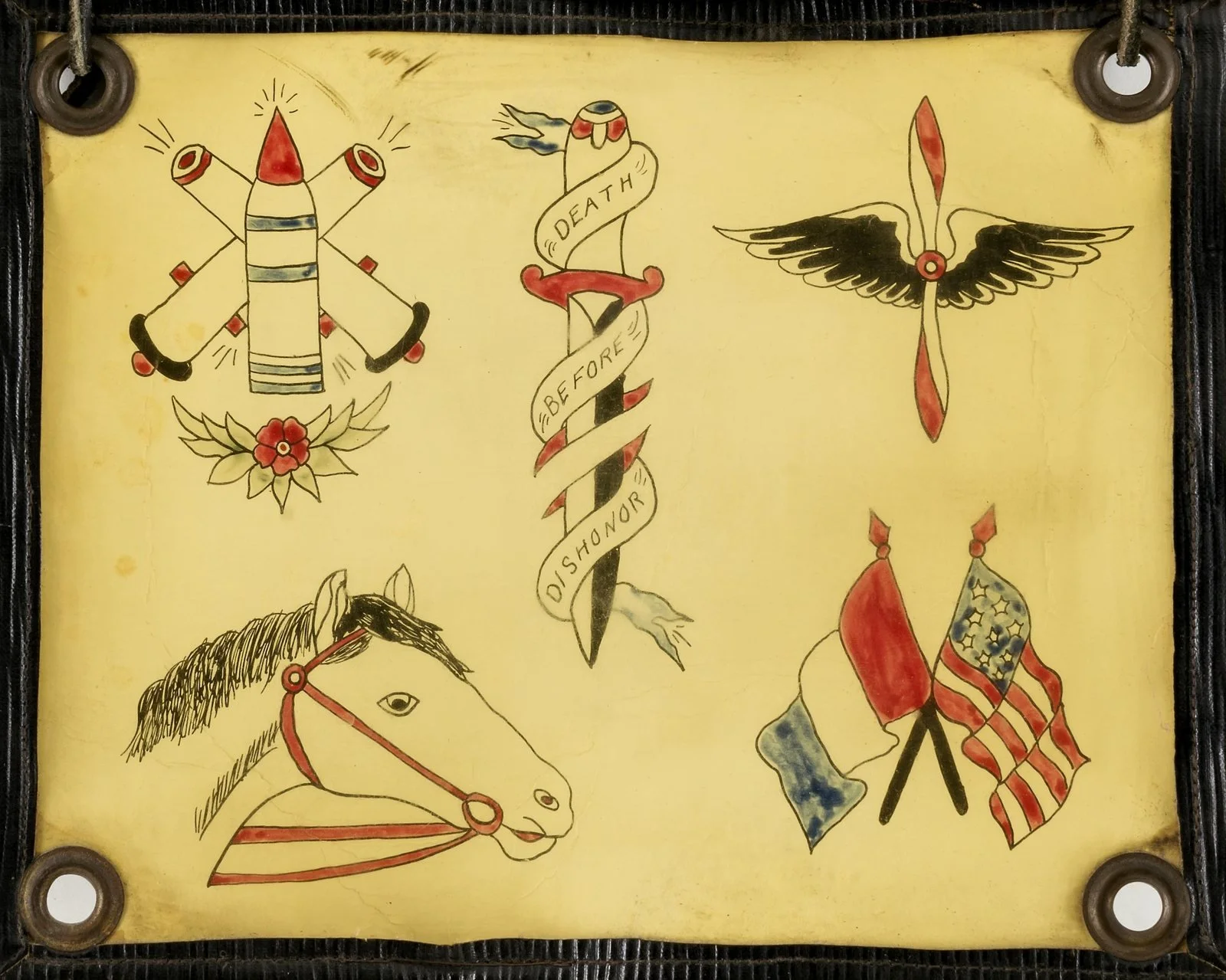
Vintage American tattoo flash from the same era, artist unknown. Not Stoney’s work. Smithsonian American Art Museum, public domain (CC0). Source: Smithsonian American Art Museum
He settled into shops too. He had a shop in Tampa, Florida. He tattooed in New Orleans, where he said a lot of his old material disappeared. His last shop was on High Street in Columbus, Ohio, under a sign reading "Stoney Knows How." He tattooed there until he died in Columbus in 1980.
Stoney's style and flash
Stoney was proud to be old school, and he could tell you what that meant.
"It's the shading, it's not the color," he said. You can use a minimum of color, but with real good shading it stands out. The old tattoos done with heavy shading, he said, still looked better on people 50 years later.
His walls were a record of American flash:
- Classic street designs: eagles, hearts, roses, daggers, bears, and names. Cover-ups of old girlfriends' names were steady work. "The only safe name to put on you is 'mom'," he said.
- Old designs passed down: some sheets, he said, came from an older tattooer named Grimshaw, and some, like the World War I Red Cross nurse called the "Rose of No Man's Land," went back generations.
- Cartoon characters: Barney Google, Happy Hooligan, the Katzenjammer Kids, and his own cartoon rats.
- Skulls: his skull sheets were shown alongside Bert Grimm's in a New York exhibition drawn from Lyle Tuttle's collection.
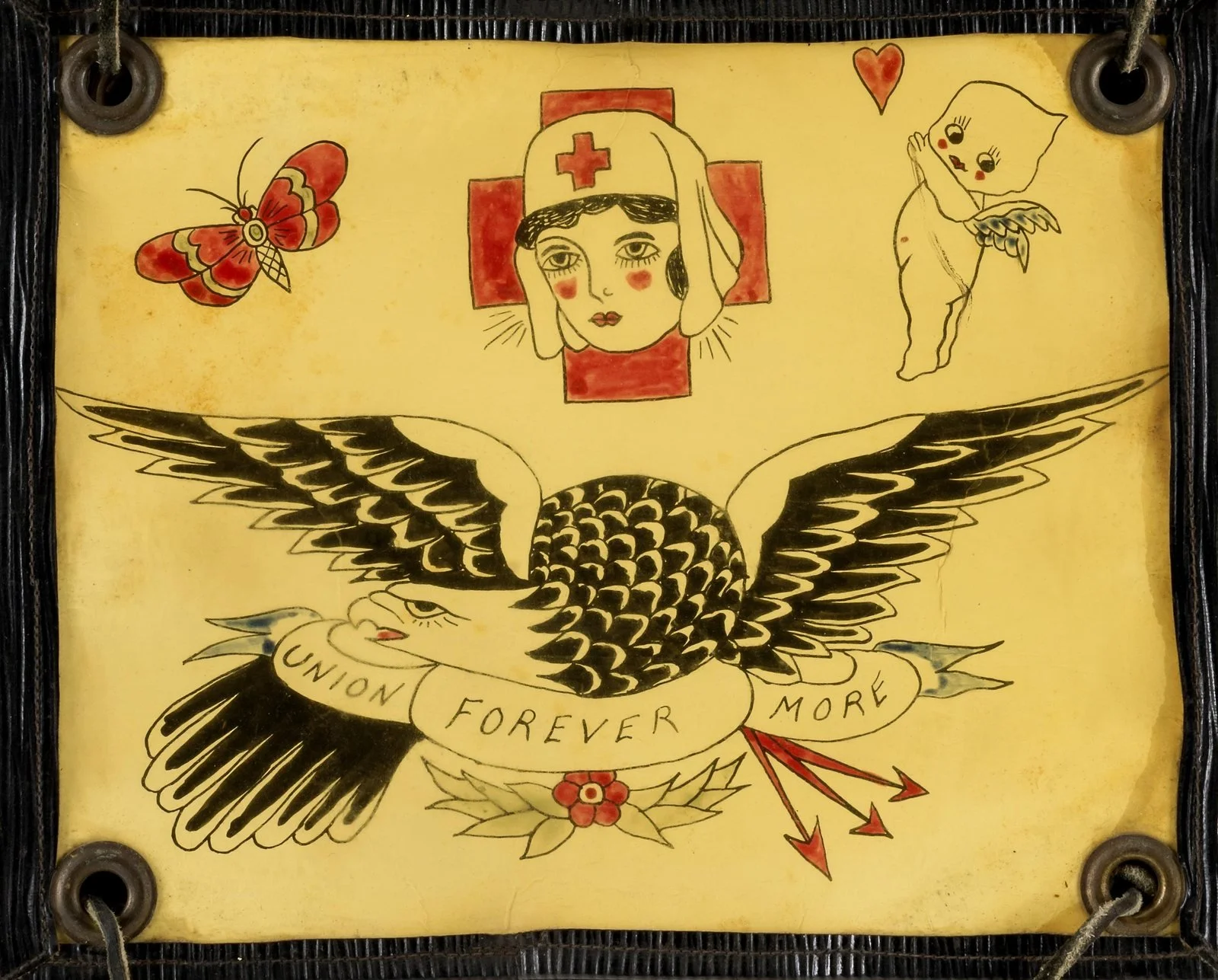
Vintage American tattoo flash from the same era, artist unknown. Not Stoney’s work. Smithsonian American Art Museum, public domain (CC0). Source: Smithsonian American Art Museum
One of his best-known sheets is a little devil with the line "This Little Devil Should Be Transfered to Heaven, He Has Served His Time in Hell."
Stoney's "This Little Devil" sheet, one of his best-known designs. Via Instagram, @stoneystclair_tribute (Stoney St. Clair tribute account).
Stoney's work was folk art in the truest sense. Rich Thomas, curator of the Ohio Tattoo Museum, has worked for years to keep Stoney's memory alive. He puts it this way: the same designs were done over and over in shop after shop, and each tattooer's own take is what made it folk art.
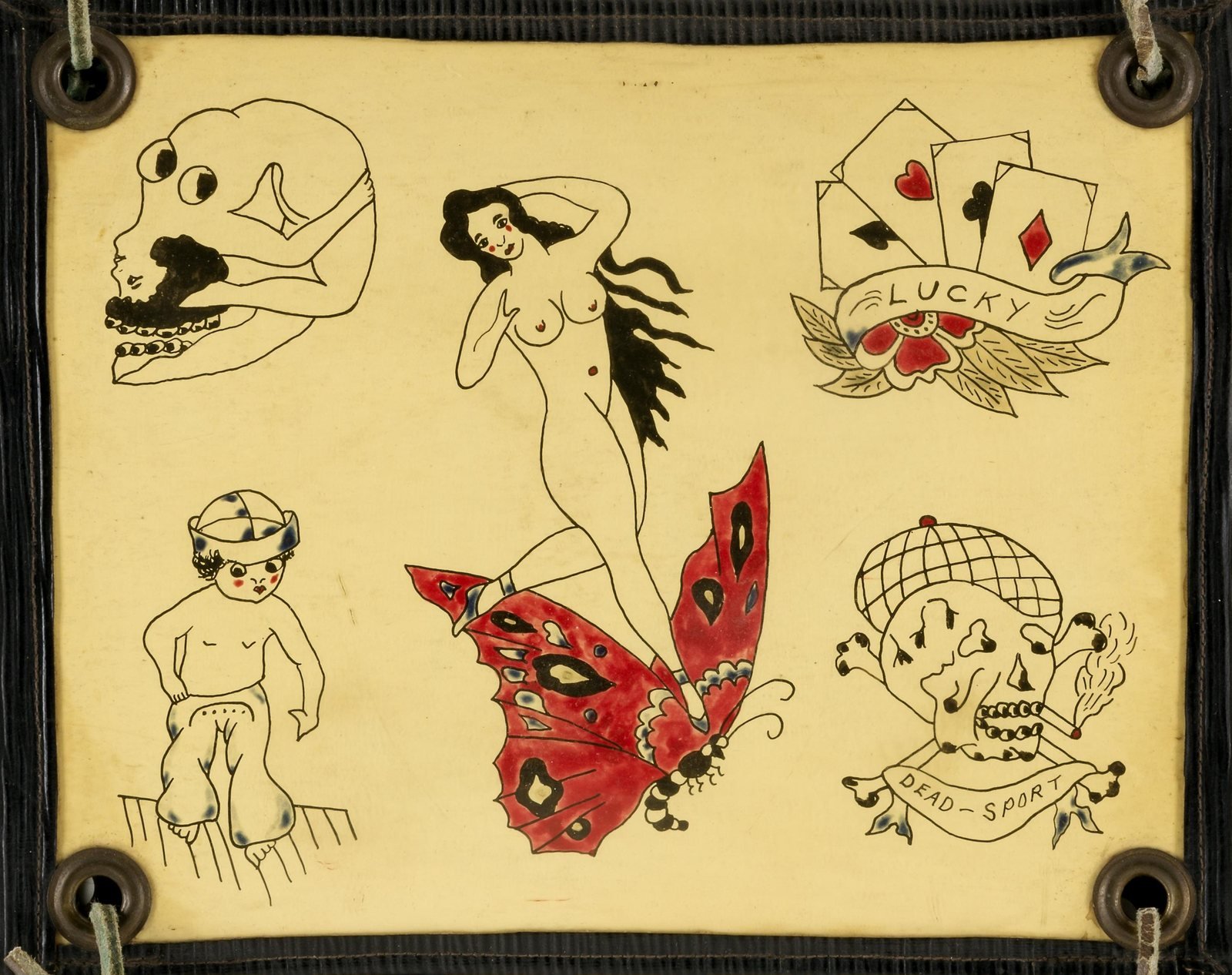
Vintage American tattoo flash from the same era, artist unknown. Not Stoney’s work. Smithsonian American Art Museum, public domain (CC0). Source: Smithsonian American Art Museum
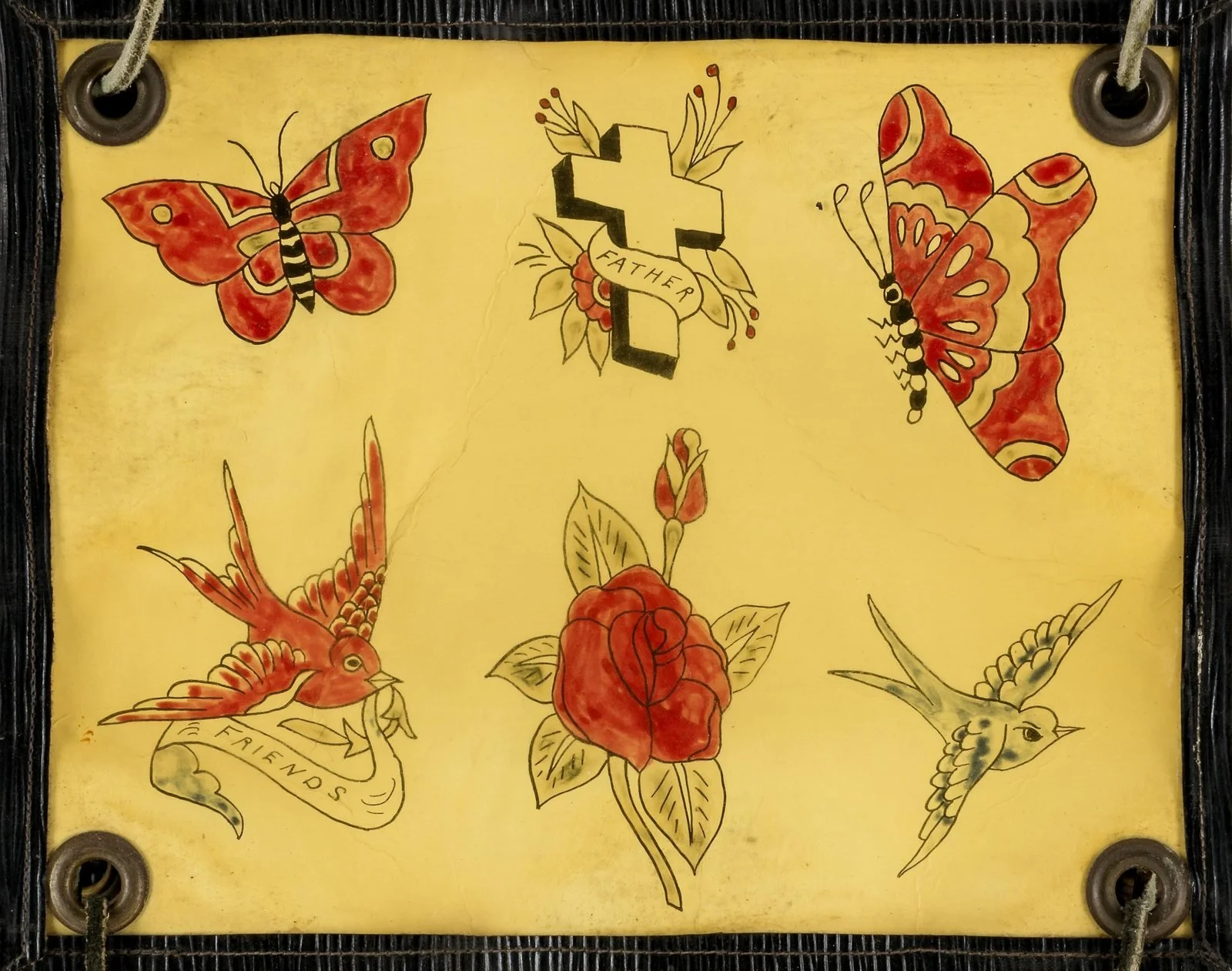
Vintage American tattoo flash from the same era, artist unknown. Not Stoney’s work. Smithsonian American Art Museum, public domain (CC0). Source: Smithsonian American Art Museum
The museum holds real Stoney sheets, too. Tattooer Durb Morrison donated his 12 sheets of original Stoney flash for its grand opening.
Durb Morrison with the 12 framed sheets of original Stoney St. Clair flash he donated to the Ohio Tattoo Museum. Via Instagram, @durbmorrison.
He worked the old way. He showed the film crew how he dusted powdered charcoal into a scratched stencil, greased the skin and pressed the stencil down to leave a guide line. He also had a code. The sign in his shop said he worked "with intelligence and skill, wishing not to offend anyone, but instead with my love of mankind to do what good I can before I die."
When Stoney tattooed Ed Hardy
The best footage of Stoney is the scene where he tattoos Ed Hardy.
By then Hardy was already a big name. He had trained with Phil Sparrow, studied in Japan through Sailor Jerry's connections and was bringing Japanese style into American tattooing. He came to Columbus while Govenar was filming Stoney Knows How, and he asked Stoney for a souvenir tattoo.
He picked a cartoon rat off Stoney's wall, a "Columbus rat." Hardy said he'd always liked cartoon rats, and that "rat" had been his nickname as a kid at the beach. He wanted something with "a happy feeling to it."
Stoney grumbled that he didn't have a machine working right. Hardy disagreed: "You got a light touch, Stoney." He praised how Stoney blended color in the old-school way and said he'd hardly seen anyone else still doing it. Stoney called it "a souvenir of Stoney's."
The same designs traveled from shop to shop. Earlier in the film, Hardy and Stoney look over his old mermaid flash, and Hardy recognizes it: he'd seen Sailor Jerry's painted version from the early 1940s. Two tattooers from opposite sides of the trade, the carnival road and the art school, talking about the same flash. That's traditional tattooing.
Stoney St. Clair tattoos Ed Hardy, from the documentary Stoney Knows How (Alan Govenar and Bruce "Pacho" Lane, filmed by Les Blank). Via YouTube, docfilm (@ethnoscope).
Stoney Knows How: the book and the film
Stoney's story survives because a college student wandered past his shop one night. Alan Govenar, then studying folklore at Ohio State, saw the signs: "As Ancient as Time, as Modern as Tomorrow" and "Tattooing by the Teacher of the Art since 1928." Stoney chased him off for taking photos without asking, then invited him in when he came back.
Govenar recorded Stoney's life in his own words. The result was the book Stoney Knows How: Life as a Tattoo Artist (University Press of Kentucky, 1981), later expanded as Life as a Sideshow Tattoo Artist by Schiffer with photos and flash. Govenar and Bruce "Pacho" Lane also made a short documentary of the same name, shot by filmmaker Les Blank. It premiered at New York's Film Forum in 1981, and Vincent Canby of The New York Times called Stoney "an ebullient little man with the gift of gab of a circus tout."
Stoney didn't live to see either one. He died in 1980. Govenar says Stoney had one request: that his obituary call him "an actor on the outdoor stage. Not only a tattoo artist."
Why Stoney matters to traditional tattooing
Stoney connects a lot of the people traditional tattooers still talk about: Cap Coleman in Norfolk, Charlie Wagner on the Bowery, the sideshow tattooers of the circus lots, and, through that afternoon in Columbus, Ed Hardy and the Sailor Jerry line.
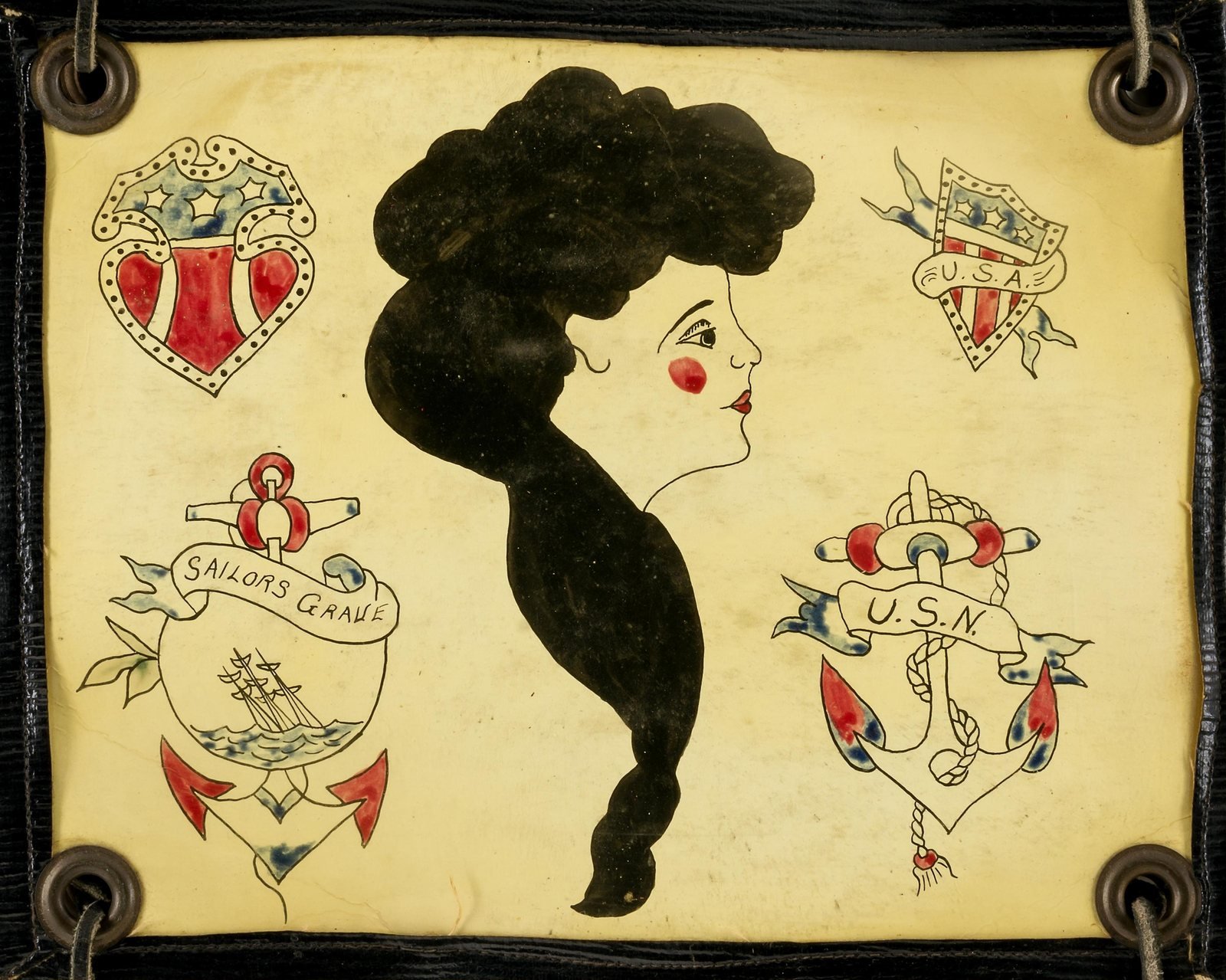
Vintage American tattoo flash from the same era, artist unknown. Not Stoney’s work. Smithsonian American Art Museum, public domain (CC0). Source: Smithsonian American Art Museum
He also shows what traditional tattooing is at heart: a trade handed down hand to hand, flash copied and redrawn, and tattoos built to last. Near the end of the film he says he hopes someone will look at the daisies over his grave and say he didn't butcher it up. "He carried it on, and handed down anyway."
Someone did. Columbus tattooer Joey Knuckles owns most of Stoney's surviving flash, and he still tattoos the designs.
Joey Knuckles tattooing one of Stoney's designs. Joey owns most of Stoney's surviving flash. Via Instagram, @joeyknucklestattoo.
Joey tells how he ended up with Stoney's flash, and a lot more, in this interview.
Joey Knuckles on Stoney St. Clair, a 44-minute interview. Via YouTube, Tattoos In Review.
Old school tattoos in Fort Lauderdale
Electric Street Tattoo is a traditional American tattoo shop at 320 E Oakland Park Blvd, serving Fort Lauderdale, Oakland Park and Broward County. Like every traditional shop, we work in the same tradition Stoney carried on, and our walls are full of flash from it. Meet our artists.
Walk-ins are welcome. Pick something off the wall, or request a tattoo.
Stoney St. Clair FAQ
Who was Stoney St. Clair?
Leonard "Stoney" St. Clair (1912–1980) was a West Virginia-born circus sword swallower who started tattooing in 1928 and worked the circus and carnival circuit, then shops including Tampa and Columbus, Ohio.
How did Stoney St. Clair learn to tattoo?
In Norfolk, Virginia, Cap Coleman gave him two old machines and some designs after seeing him draw an eagle. He practiced on grapefruits, then on showmen behind the elephant barn.
Did Stoney St. Clair tattoo Ed Hardy?
Yes. The documentary Stoney Knows How shows Stoney tattooing a cartoon "Columbus rat" on Ed Hardy as a souvenir.
Where can I watch Stoney Knows How?
The film streams on Folkstreams, the Criterion Channel and Vimeo On Demand. The Ed Hardy scene is on YouTube.
Where can I get an old school tattoo near Fort Lauderdale?
Electric Street Tattoo, 320 E Oakland Park Blvd. Walk in or request a tattoo.

Traditional Tattoo Parlors vs. Private Studios: Which Is Right for You?
Classic walk-in tattoo parlor or appointment-only private studio? How they differ on flash, walk-ins, vibe and specialties, from a traditional shop.

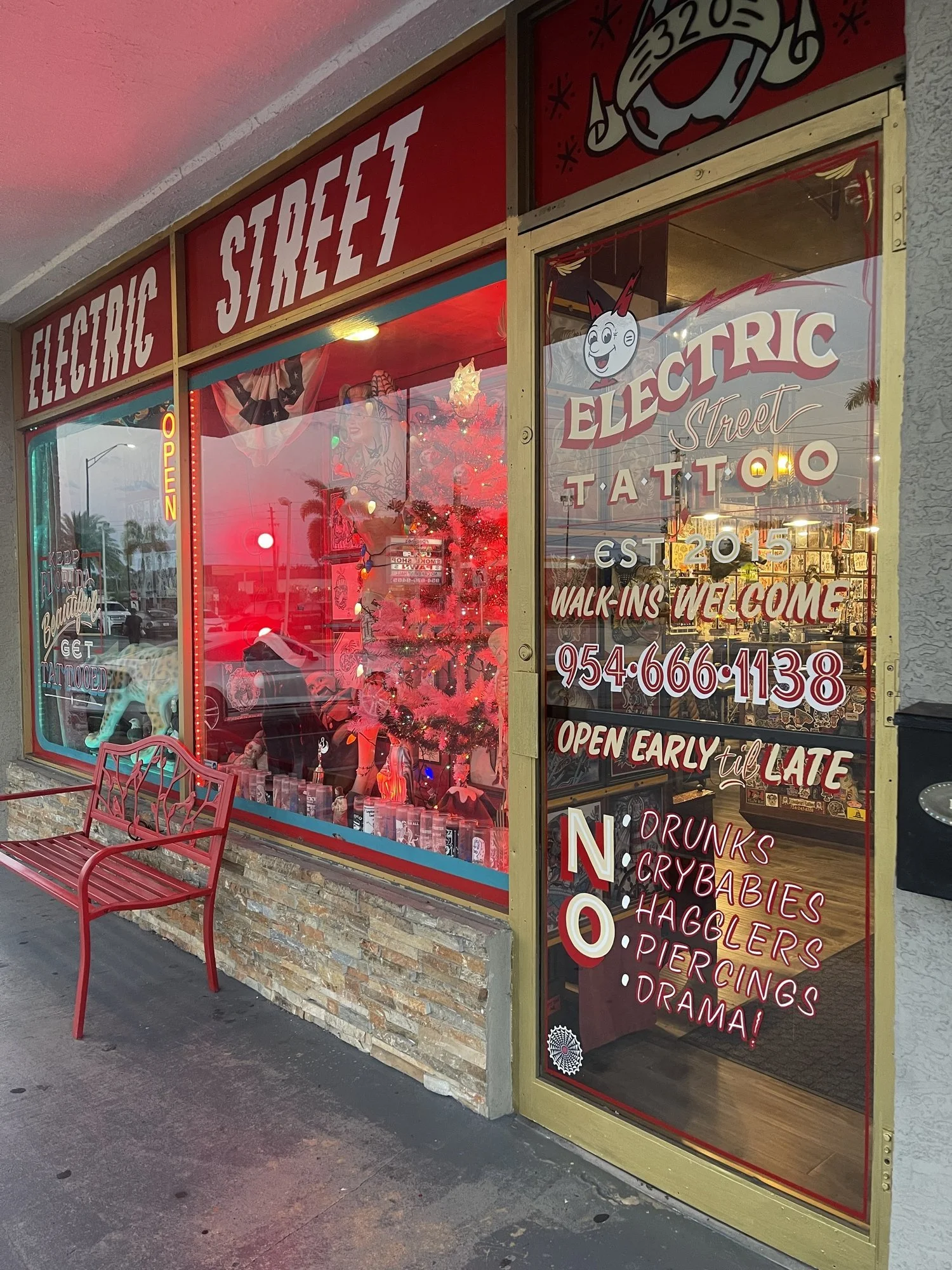
The front door at Electric Street Tattoo, 320 E Oakland Park Blvd
In recent years, the world of tattooing has witnessed a remarkable evolution. While traditional tattoo parlors have been the backbone of the industry for generations, trendy private studios have started to pop up everywhere, offering a fresh take on the art of ink. But what sets a traditional tattoo parlor apart from these contemporary counterparts? Let's dive into the world of ink and explore what makes a traditional tattoo parlor unique.
What makes a traditional tattoo parlor different
A Rich Heritage: Traditional tattoo parlors are steeped in history. They carry the legacy of classic American tattooing, which dates back to the early 20th century. These parlors pay homage to legendary artists like Sailor Jerry, who pioneered the iconic style.
Aesthetic Nostalgia: Stepping into a traditional tattoo parlor is like stepping back in time. The décor often features vintage-inspired elements, classic flash art on the walls, and a timeless ambiance that honors the art's heritage.
Iconic Designs: Traditional tattoo parlors are known for their portfolio of iconic designs. From anchors and swallows to roses and nautical symbols, these classic images resonate with clients who appreciate the artistry of simplicity.
Bold and Time-Tested Techniques: Traditional tattoo artists are masters of bold lines and solid black outlines. Many traditional tattooers still love coil machines, though good rotary machines are used in every kind of shop today. What makes it traditional is the bold line and solid color, not the machine. These techniques ensure that your tattoo maintains its clarity and readability for years to come.
Sense of Community: Traditional tattoo parlors often foster a sense of community. Clients and artists share a passion for the history and craftsmanship of traditional tattooing. It's a place where you can connect with fellow enthusiasts.
What private studios offer
Modern Minimalism: Trendy private studios embrace modern minimalism. These spaces often have a sleek, minimalist aesthetic that appeals to clients looking for a contemporary atmosphere.
Artistic Versatility: Private studios are known for their versatility. They may offer a wide range of tattoo styles, from realism to abstract art, catering to clients seeking unique and personalized designs.
Customization: In private studios, customization is key. Artists work closely with clients to create tattoos that reflect their individuality. This level of personalization can lead to one-of-a-kind pieces of art.
Privacy and Comfort: Private studios offer a more intimate experience. Clients can enjoy privacy and one-on-one attention, which can be especially appealing for those who prefer a quieter, more relaxed setting.
How to choose
The choice between a traditional tattoo parlor and a trendy private studio ultimately comes down to personal preferences. Traditional parlors celebrate a rich heritage, iconic designs, and a sense of community, making them an ideal choice for those who appreciate classic tattooing. On the other hand, private studios offer artistic versatility, customization, and a modern aesthetic, appealing to clients seeking unique and personalized ink.
Whichever path you choose, the world of tattooing is vast and diverse, with something for everyone. Whether you're drawn to the timeless traditions of a traditional tattoo parlor or the artistic possibilities of a private studio, the ink you wear should be a reflection of your individuality and style.
What you get at a classic shop
Walk-ins and flash. Pick a design off the wall and get it today, or work out a custom idea with whoever is free.
A crew, not one artist. Several tattooers with different specialties under one roof, so you can match the artist to the tattoo.
No frills. You walk in, get tattooed and walk out with something that lasts.
Community. The buzz of machines, flash on every wall, and people swapping stories while they wait.
Private studios are usually appointment-only. They trade that energy for privacy, a quieter room, and one artist’s full attention. Both can make great tattoos, so pick the experience you want.
Visit a traditional parlor in Fort Lauderdale
Electric Street Tattoo is an artist-owned American Traditional shop at 320 E Oakland Park Blvd, serving Fort Lauderdale, Oakland Park and Broward County since 2015. Walk-ins welcome, or request a tattoo. (954) 666-1138. See how walk-ins work and meet our artists.
Now Hiring: Tattoo Artists, Apprentices and Shop Help
Tattoo artist jobs and apprenticeships in Fort Lauderdale. Electric Street Tattoo in Oakland Park is always hiring artists, apprentices and shop help.
Electric Street Tattoo is always hiring. We're an artist-owned American Traditional tattoo shop at 320 E Oakland Park Blvd in Oakland Park, open since 2015 and serving Fort Lauderdale, Oakland Park, and Broward County. If you tattoo, want to learn, or want to help run a busy shop, read on.

All inquiries are kept confidential.
About the shop
American Traditional is the core of what we do. The crew also tattoos Japanese, tribal and fine line. It's a laid-back traditional parlor with walk-ins welcome. Everything stays on the up and up: no drugs, no drama. Positive vibes are always welcome. Meet the crew.
Join the crew
We're always looking for good people in four roles: tattoo artists, guest artists, apprentices and shop help.
Tattoo artists
We want experienced tattoo artists with a solid portfolio and references, and strong traditional work. You should be dedicated and self-motivated, and run your book like a true professional. Be your own boss, without the drama.
Guest spots
Guest spots are always open. Traveling artists looking for a place to call home while in Florida can email, DM or use our request form. Send your portfolio and the dates you'll be in town. See past guests in Guest tattoo artists at Electric Street.
Apprentices
Want to learn to tattoo the traditional way? Bring a portfolio of drawings, ideally traditional flash. Apprentices learn hands-on from working artists. Read Tattoo apprenticeships: why they matter first, and if you're still asking whether you can hack it, read Is tattooing hard?.
Shop help and front desk
Shop help is the face of the shop and the first person clients meet. The job covers answering phones and messages, booking appointments, greeting walk-ins, and keeping the shop clean and set up. You need to be friendly, reliable, good with people and good with details.
What we look for
- A portfolio that shows your work (drawings are fine for apprentices).
- References, for artists.
- Dedication, self-motivation and professionalism.
- No drugs, no drama.

The shop, 320 E Oakland Park Blvd.
How to apply
Email electricstreettattoo@gmail.com or DM @electricstreettattoo on Instagram. Tell us which role you want and send your portfolio (link or photos) and references. Guest artists can also use our request form; add your dates. All inquiries are kept confidential. Pay, schedules and apprenticeship details are covered in person during the interview.
You can also stop by the shop at 320 E Oakland Park Blvd, Oakland Park, FL 33334, or call (954) 666-1138. Hours are Tue to Sat 1 to 9pm, Sun and Mon 12 to 6pm. More on the contact page.
FAQ
Is Electric Street Tattoo hiring right now?
Yes. Hiring and guest spots are always open.
What styles does the shop do?
American Traditional is the core. The crew also does Japanese, tribal and fine line.
Do you take guest artists?
Yes. Email, DM or use our request form with your portfolio and dates. See our guest artists.
Do you take apprentices?
Yes. Bring a portfolio of drawings, ideally traditional flash.
What does shop help do?
Phones and messages, booking, greeting walk-ins, and keeping the shop clean and set up.
How does pay work?
Pay, schedules and apprenticeship details are covered in person during the interview.
How do I apply?
Email electricstreettattoo@gmail.com or DM @electricstreettattoo on Instagram with your portfolio and references.

Sailor Jerry Tattoos: Who He Was and What the Classic Designs Mean

Classic Sailor Jerry flash designs
Sailor Jerry was Norman Keith Collins (1911–1973), a Navy veteran who tattooed in and around Honolulu's Hotel Street from the 1930s until his death. His bold black lines, tight color palette and clean designs (swallows, anchors, pinups, eagles, ships) helped define the American Traditional tattoo. Decades later his flash is still tattooed every day, including at our shop in Fort Lauderdale.
Who was Sailor Jerry?
Collins was born January 14, 1911, in Reno, Nevada. As a teen he rode freight trains and hand-poked tattoos, then learned the electric machine from Gib "Tatts" Thomas in Chicago. He joined the Navy at 19, and his travels in Asia started a lifelong study of Japanese tattooing.
He settled in Honolulu in the 1930s. In World War II, Hotel Street's bars and tattoo parlors were where thousands of servicemen spent their shore leave. Collins tattooed there, then at 1033 Smith Street in Chinatown, his last shop. He also skippered a tour boat, played saxophone and hosted a radio show as "Old Ironsides." He died in Honolulu on June 12, 1973.

Norman Collins, aka Sailor Jerry, outside his Honolulu shop
The Sailor Jerry style
Sailor Jerry redrew the sailor tattoos of the 1920s and '30s cleaner and bolder. As historian Matt Lodder puts it, his designs are "simple and stripped-down enough that they look great in the skin, are readable from a distance, and age superbly."
Bold black outlines that hold for decades.
A limited palette. Mostly black, red, yellow and green. He mixed his own pigments, including one of the first purples that held up and was safe.
Flash. A huge catalog of ready-to-pick designs: anchors, swallows, eagles, roses, mermaids, pinups.
Japanese influence. He traded letters with Japanese masters, especially Kazuo Oguri (Horihide). He sent American inks and got back ideas on composition and backgrounds.
Craft. He built his own needle setups and machines, and he was an early adopter of single-use needles and autoclave sterilization.

Sailor Jerry style mallard duck tattoo by Josh
Classic Sailor Jerry designs and what they mean
Most of these old sailor tattoos come from navy superstition. Sailor Jerry didn't invent them, but his versions became the standard.
Swallow: safe return home. Tradition says one for every 5,000 nautical miles.
Anchor: stability, often with "Mom" or a sweetheart's name.
Nautical star: finding your way home.
Ship: adventure, and making it back "Homeward Bound."
Pinup: the girl back home.
Hula girl: a souvenir of Hawaii and Hotel Street.
Eagle: patriotism and freedom.
Panther: toughness, usually mid-attack.
Dagger: courage and sacrifice ("Death Before Dishonor").
Pig and rooster: protection from drowning.

Traditional Sailor Jerry style swallow tattoo
Sailor Jerry's legacy
Collins wanted his shop to go to one of his protégés, Ed Hardy, Mike Malone or Zeke Owen, or else be burned. Malone took it over as China Sea Tattoo. Through Collins's contacts, Hardy went to Japan in the early 1970s to work with Horihide. In 1999 Hardy and Malone co-founded Sailor Jerry Ltd., which put his designs on clothing and launched the Sailor Jerry rum. His flash has hung in museums, and the 2008 documentary Hori Smoku Sailor Jerry tells his story.
Why his tattoos are still everywhere:
Timeless: classic Americana that works for every generation.
The traditional revival: his flash is at the center of it.
Craftsmanship: bold will hold, and they still read clearly decades later.
Personal meaning: a loved one, a milestone, military service, the sea.
They tie us to an era when tattoos stood for defiance, camaraderie and individuality.

Electric Street pays respect to Sailor Jerry all around our shop
Getting a Sailor Jerry style tattoo in Fort Lauderdale
Electric Street Tattoo is an artist-owned American Traditional shop at 320 E Oakland Park Blvd, serving Fort Lauderdale, Oakland Park and Broward County since 2015. Owner Josh Cabrera started his apprenticeship in Miami and has more than 25 years in the chair. Our walls are covered in flash, and our artists care about the tradition: Sailor Jerry, Bert Grimm, and the rest of that lineage.
Pick a classic off the wall or bring a custom idea. Walk-ins are welcome, or request a tattoo. Then follow our aftercare guide.
Next in tattoo history: Stoney St. Clair, the circus sword swallower who became a sideshow tattooer.

Sailor Jerry flash I painted several years ago (Josh)

From our reception room
Sailor Jerry tattoo FAQ
What is a Sailor Jerry tattoo?
A tattoo in the style of Norman Collins: bold outlines, a few strong colors, and classic designs like swallows, anchors, pinups and ships, often straight from his flash.
What do swallow tattoos mean?
A safe return home. Sailors traditionally got one for every 5,000 nautical miles.
Is Sailor Jerry the same as American Traditional?
Not exactly. American Traditional is the whole style, built by many tattooers. Sailor Jerry is its best-known name.
What are sailor tattoos?
Designs sailors wore as travel marks and good-luck charms: swallows, anchors, nautical stars, ships, "Hold Fast" knuckles.
Where can I get a Sailor Jerry style tattoo near Fort Lauderdale?
Electric Street Tattoo, 320 E Oakland Park Blvd, (954) 666-1138. Walk in or request a tattoo.

Tattoo apprenticeships in traditional tattoo shops: A history lesson and why they matter
Why tattoo apprenticeships matter at traditional shops: a short history, why online courses aren't the same, and how to find a real apprenticeship.

Apprenticeships have been how tattooing is passed down for generations. They are an essential part of the training process for new tattoo artists, and they play a vital role in preserving the traditions and artistry of traditional tattooing.
A brief history of tattoo apprenticeships
The history of tattoo apprenticeships can be traced back to the early days of tattooing. In traditional cultures, tattoo artists were often trained by their fathers or other family members. These apprenticeships were rigorous and demanding, and they could last for many years.
In the early 20th century, tattooing began to become more popular in the Western world. As a result, more and more people began to seek out tattoo apprenticeships. However, many of these apprenticeships were informal and unregulated. Legends like Bert Grimm learned from the tattooers before them and went on to mentor the next generation.
In the 1970s and 1980s, there was a resurgence in traditional tattooing. During this time, many traditional tattoo shops began to offer formalized apprenticeship programs. These programs were typically two to three years in length, and they covered all aspects of tattooing, from machine maintenance to design and execution.
Why are tattoo apprenticeships important?
Tattoo apprenticeships are important for a number of reasons. First, they provide new tattoo artists with the opportunity to learn from experienced professionals. Apprenticeships also help to ensure that new tattoo artists are trained in the safe and sanitary practices of tattooing.
In addition, tattoo apprenticeships play a vital role in preserving the traditions and artistry of traditional tattooing. Apprenticeships teach new tattoo artists the classic tattoo designs and techniques that have been passed down for generations.
Why learning online is not the same
While there are some online resources that can be helpful for aspiring tattoo artists, there is no substitute for a traditional tattoo apprenticeship. Online resources cannot provide the same level of hands-on training and mentorship that an apprenticeship can.
In a traditional tattoo apprenticeship, apprentices learn from experienced tattoo artists who can teach them the proper techniques for using a tattoo machine, creating designs, and working with clients. Apprentices also learn about the history and culture of tattooing, as well as the importance of safety and sanitation.
Online resources can be helpful for learning about the basics of tattooing, but they cannot replace the real-world experience of an apprenticeship. If you are serious about becoming a tattoo artist, I encourage you to seek out a traditional tattoo apprenticeship.

How to find a tattoo apprenticeship
If you are interested in finding a tattoo apprenticeship, there are a few things you can do. First, talk to your local tattoo shops and see if they have any apprenticeship openings. You can also search online for tattoo apprenticeship postings.
Once you have found a few potential apprenticeship opportunities, you should visit the tattoo shops and meet with the tattoo artists who are offering apprenticeships. This will give you a chance to learn more about the apprenticeship program and to see if it is a good fit for you.
When choosing a tattoo apprenticeship, it is important to consider the following factors:
The experience and reputation of the tattoo artist
The quality of the tattoo work that the tattoo artist produces
The length and structure of the apprenticeship program
The cost of the apprenticeship program
The bottom line
Tattoo apprenticeships are an essential part of traditional tattoo culture. They provide new tattoo artists with the opportunity to learn from experienced professionals, and they play a vital role in preserving the traditions and artistry of traditional tattooing.
If you are serious about becoming a tattoo artist, I encourage you to seek out a traditional tattoo apprenticeship. It is the best way to learn the skills and knowledge you need to become a successful tattoo artist.